Products supplied
Circular Knits
in Rolls
Circular knits
Jersey, Interlock, Rib 1×1, Piqué, French Terry, Brushed Fleece, Waffle, Jacquard, Mesh, Milano / Ponte Roma, Micromodal and Spandex
In practice, circular knits are the end result of the knitting process. Their wide acceptance among consumers is mostly due to their soft touch on the skin: one of their main characteristics. For that reason, a large share of the articles made in circular knit are precisely those with the greatest skin contact: sportswear, beachwear and pyjamas are examples of this.
More recently, the fashion world has increasingly adopted an urban style, and the growth of the sports-and-leisure market segment has also benefited from some of their advantages: they are lightweight garments that let the body breathe and allow the wearer to keep freedom of movement. These characteristics also apply in other areas, such as decoration and home textiles, precisely because of their ability to circulate air and regulate body temperature more effectively.
Contact our sales department for knit development.
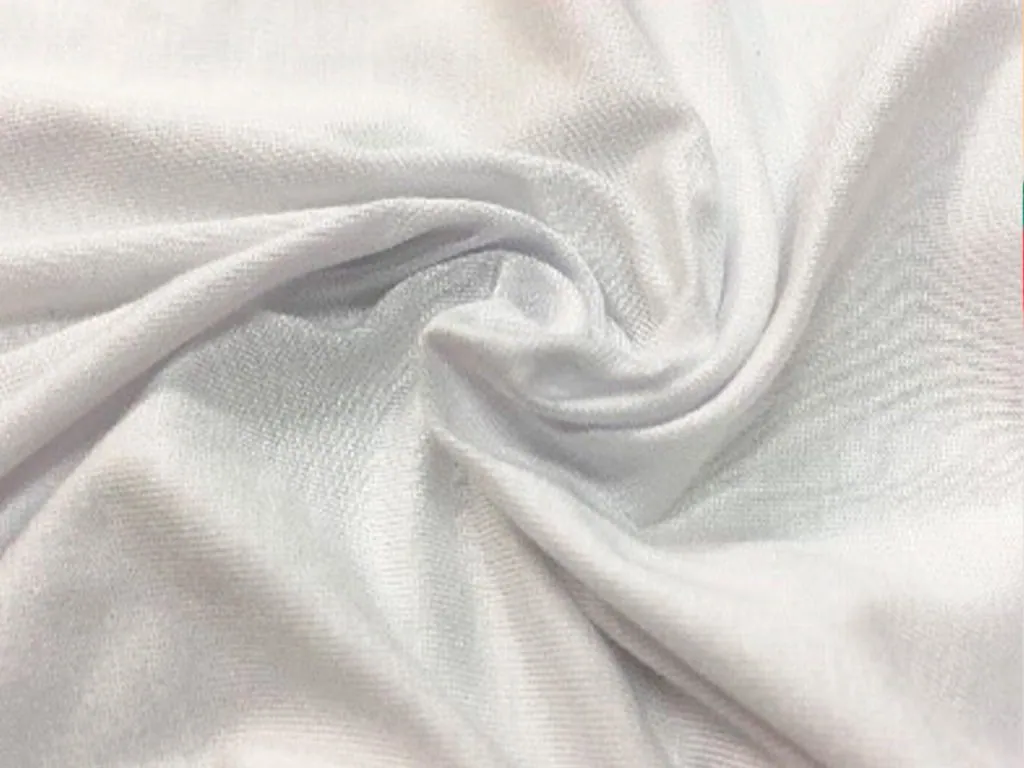
Characteristics
What circular knits are
Flexibility
Because there is no fixed point, circular knits support themselves. This means they can move relative to one another, offering greater resistance to tensile force and moulding perfectly to the human body.
Elasticity
The absence of a fixed point is also why they become more elastic: because they move relative to one another, they return to their initial position after a moment of tension.
Breathability
Circular knits let air circulate and allow heat exchange with the surrounding environment. At higher temperatures, body heat is absorbed by the air; at colder temperatures they act as thermal insulation, keeping the body warm.
Stability
Stability refers to the dimension of the final product, whether a garment or a decorative piece. Once reached, the dimension of the final product is maintained over time.
Natural circular knits are produced from natural fibres, from cotton to silk, wool or nettle fibre. Synthetic circular knits are produced from synthetic fibres such as polyester or elastane, but also lurex or polyamide. Among artificial-fibre knits we find some of the most technologically advanced fibres on the market, which allow knits in SeaCell or Tencel (Lyocell). With FR viscose, for example, it is possible to create fire-resistant pieces; with Cell Solution Protection, the final articles are better suited to contexts of greater contact with nature.
Jersey knit
Jersey circular knits are an incredibly versatile type of knit. They are so common that they can be seen in practically every home in the world. Soft and stretchy, they are an excellent option for making t-shirts and dresses, but also pillowcases or sheets, and they work for all styles, shapes and seasons. They can be used in all kinds of clothing, including sportswear, running gear and even cycling, allowing freedom of movement and high levels of comfort.
Wool used to be one of the most widely used materials in creating Jersey knits. As technology became more sophisticated and techniques were refined, wool's characteristics were surpassed by those of cotton fibres, to which artificial and synthetic fibres were then added, making them more resistant and flexible. Today, most Jersey circular knits are 100% cotton or a blend of different fibres, with elastane one of the most common fibres added to cotton.
Jersey knit types fall into two main categories: single knits and double-faced knits. The first is made so that the knit is smoother on one side than the other; the second joins two pieces of single knit so that both sides are smooth, making them more durable and hard-wearing.
The characteristics of Jersey knits are widely recognised for their soft touch and stretch, a result of the way they are structured, which also makes them slightly opaque. When they use cotton fibres, they become even more absorbent and breathable, making them perfect for sensitive skin, especially when made in organic cotton.
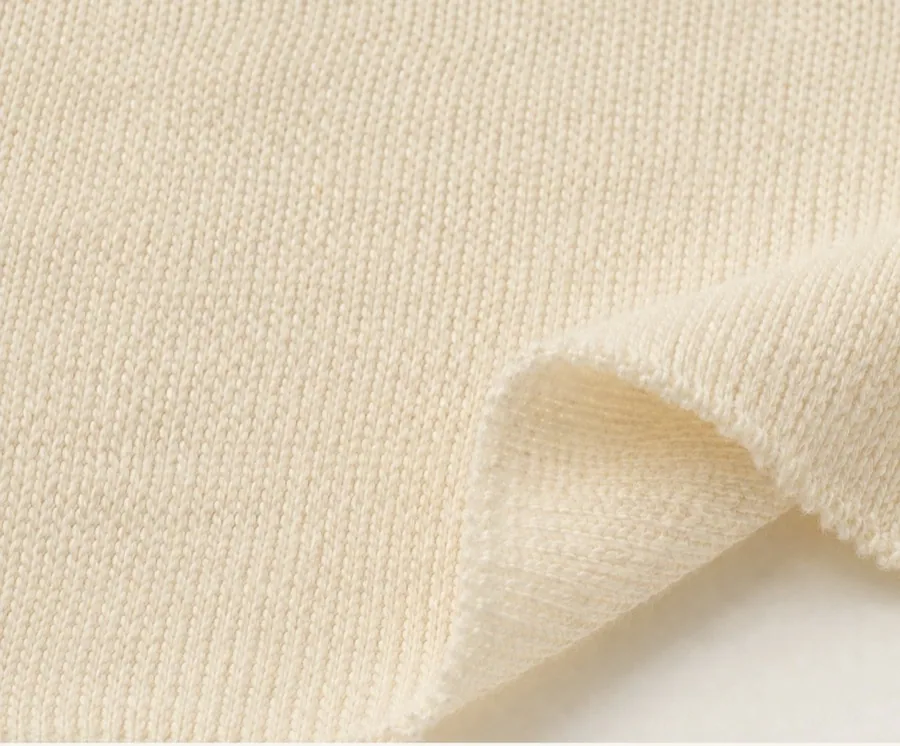
Interlock Knit
Double-knit fabric with two identical, smooth faces. Denser and more stable than jersey, it does not curl at the edges and holds its shape: used in quality apparel, underwear and items that demand good drape.
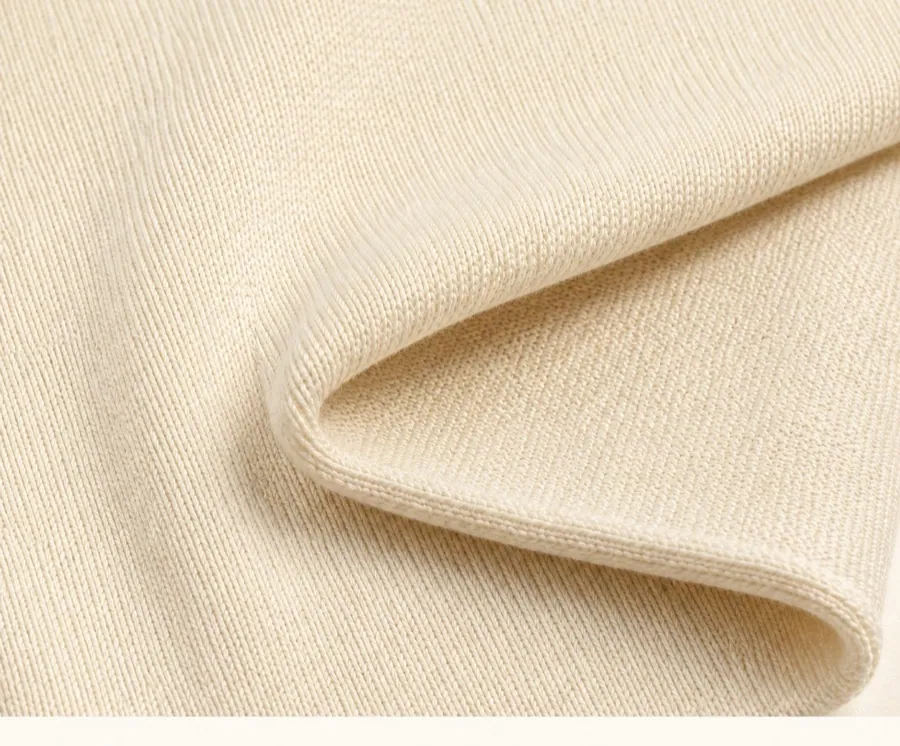
Rib 1×1 Knit
Alternating columns of face and reverse stitches give this fabric far greater crosswise stretch. It is the structure of cuffs, collars and waistbands, and of every piece that must stretch and recover.
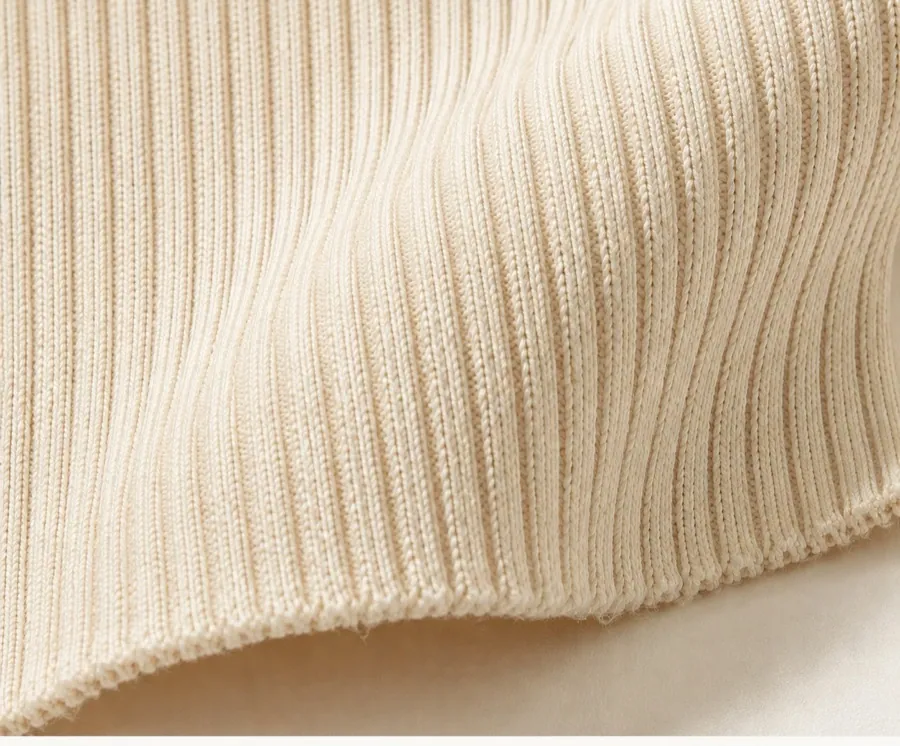
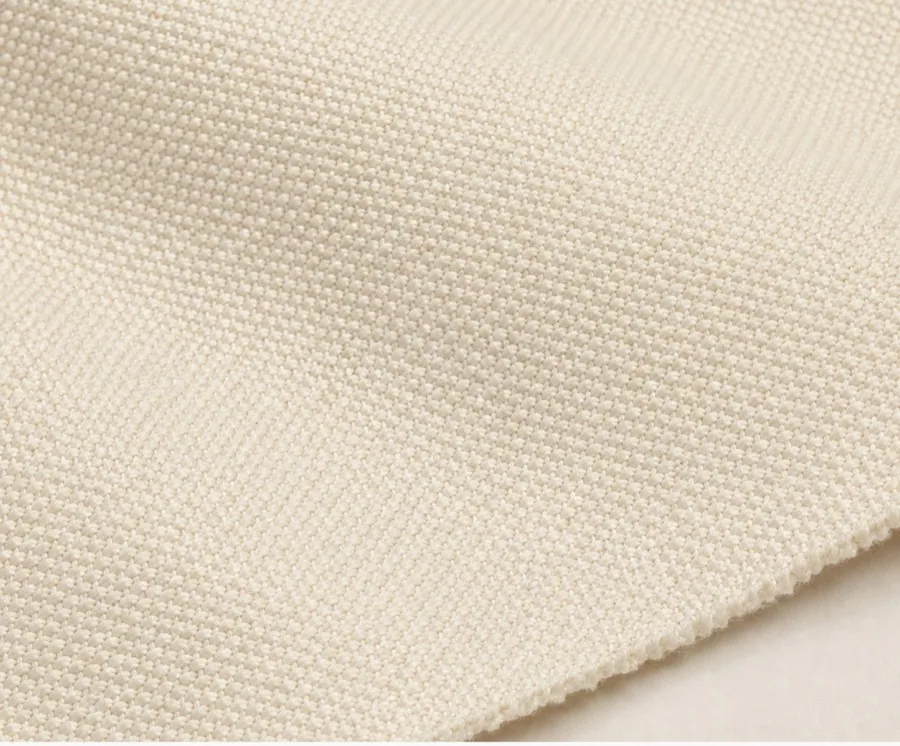
Piqué Knit
A textured structure with small, regular cells that create volume and air channels. It is the classic polo-shirt knit: breathable, hard-wearing and with a dry hand that does not cling to the skin.
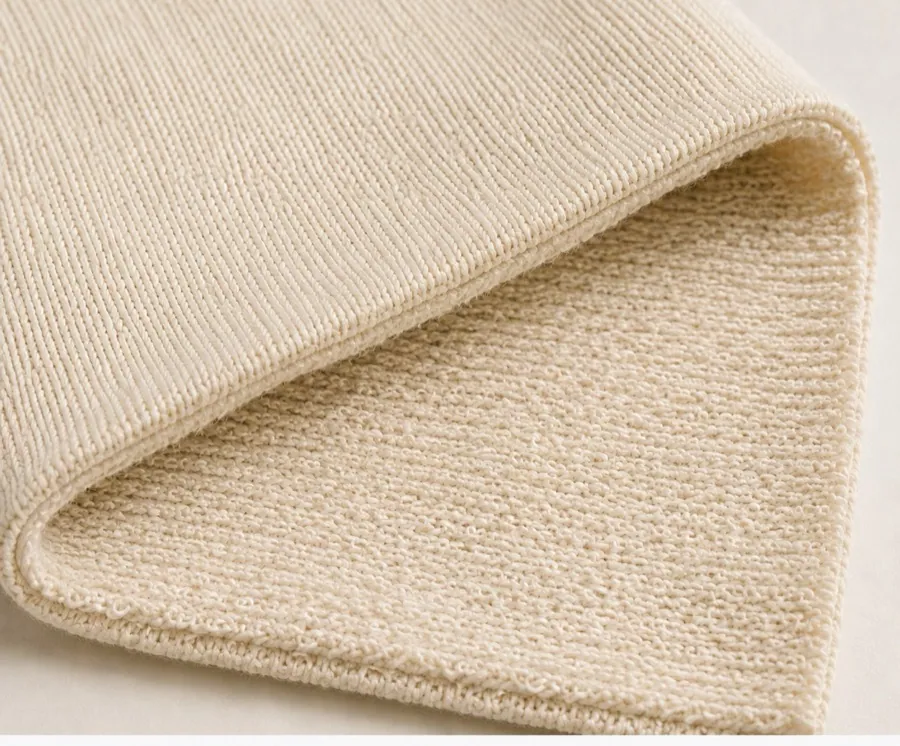
French Terry
A smooth outer face with uncut yarn loops on the reverse. The loops absorb moisture and provide insulation without the weight of fleece: the fabric of mid-season sweatshirts and sportswear.
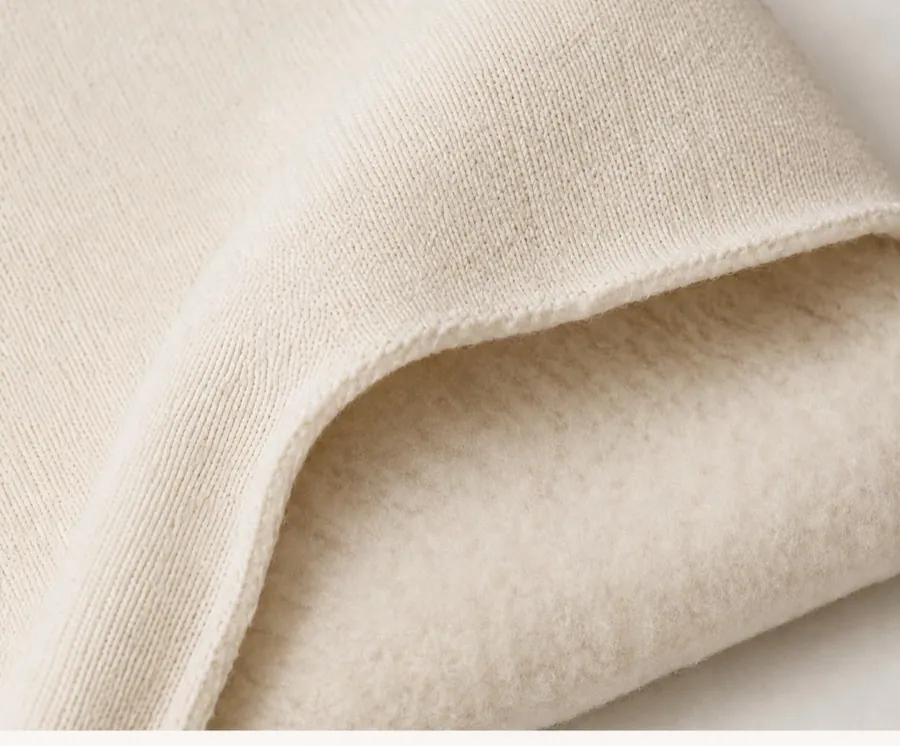
Brushed Fleece
French terry whose reverse has been brushed until the loops open into a pile. The air trapped in that pile provides the thermal insulation, with a soft hand: used in winter sweatshirts, linings and technical apparel.
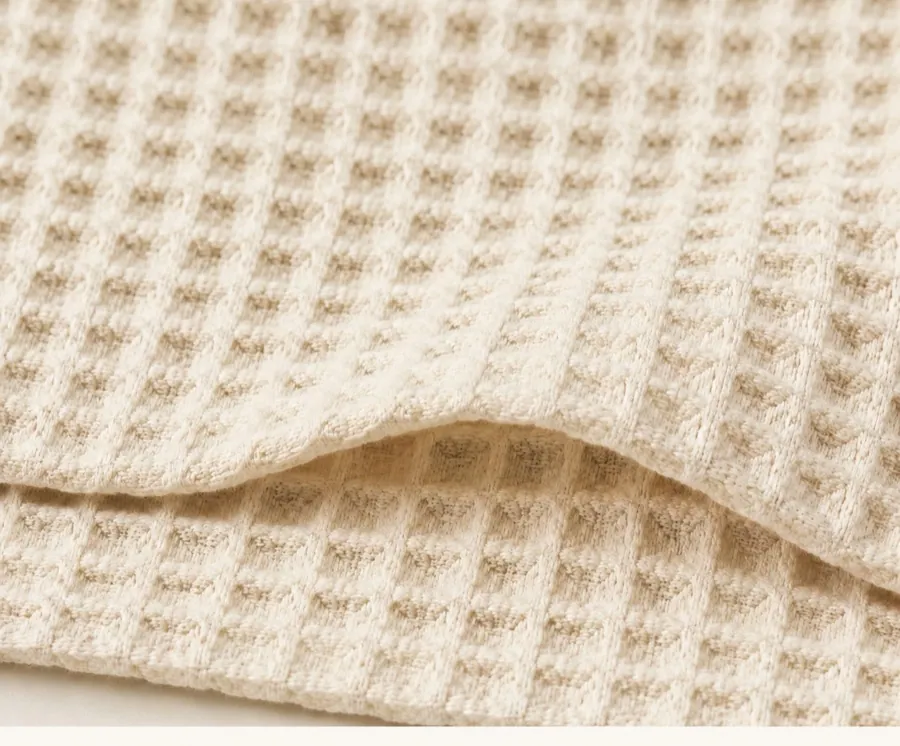
Waffle Knit
A deep grid relief, like a honeycomb. The cavities trap air and greatly increase the contact surface, giving thermal insulation and good absorption: used in thermal underwear, blankets and home textiles.
Jacquard knit
Jacquard is a complex, ornamental pattern woven into a textile with the help of a very specific loom: the Jacquard loom. Generally, the fabrics chosen to weave these patterns are cotton, silk, wool or synthetic fabrics, although other materials can be used.
Today, Jacquard-woven pieces are most used in home decoration, such as curtains or bed linen, although Jacquard is also found in more classic clothing, such as dresses, skirts, overcoats or formal suits.
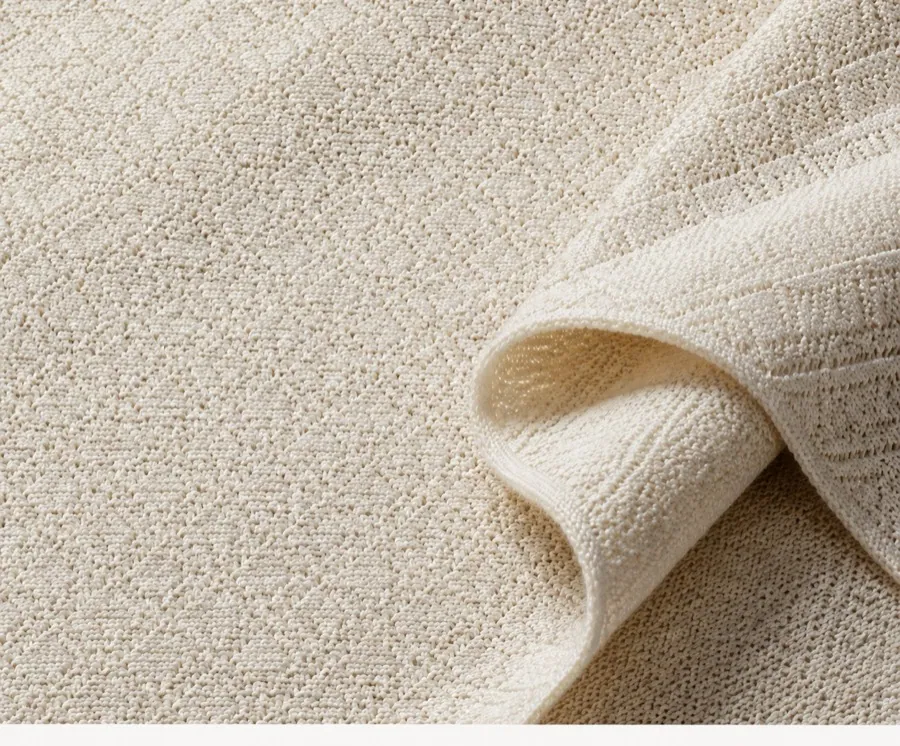
Mesh Knit
An open structure with regular apertures that let air pass freely. It is the ventilation knit: footwear linings, sportswear, breathable panels and any application where air must circulate.
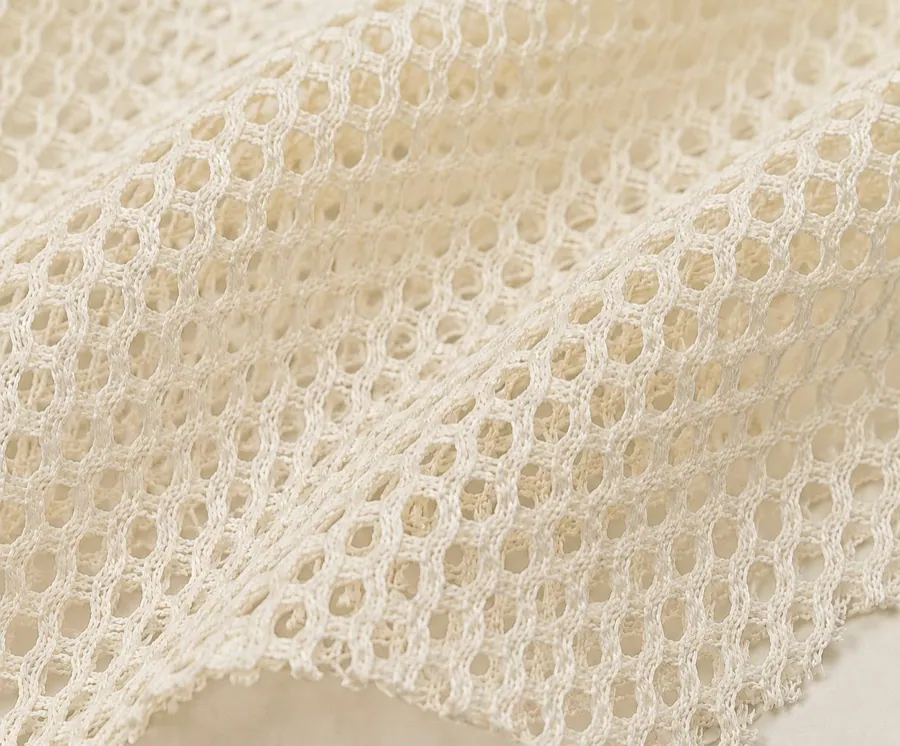
Milano / Ponte Roma
A firm, substantial double knit with very little stretch and excellent dimensional stability. It holds its structure without lining: the fabric of suits, skirts, blazers and pieces with defined lines.
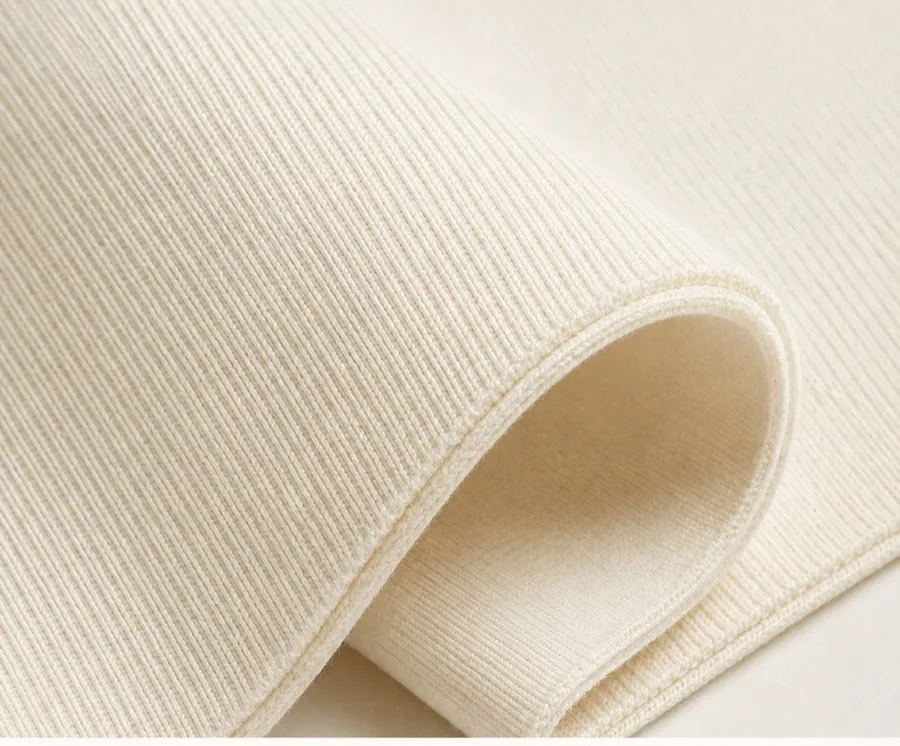
Micromodal knit
Made from a special type of cellulose from European beech fibres, micromodal is a light, breathable and soft circular knit, widely used in creating a broad range of clothing and accessories. Its name derives from another artificial fibre, modal; both are known for being extremely soft and are obtained through the same type of chemical process, involving beech cellulose.
It also has a high level of absorbency and dries quickly, which makes micromodal an excellent choice for all types of clothing, particularly those intended for sports or leisure activities. To its lightness, breathability and soft touch is added a luxurious feel and a very attractive drape.
Micromodal circular knits are also incredibly easy to care for: they can be machine washed and air dried without shrinking, since they are highly absorbent and dry quickly. Besides lingerie and activewear, this knit is also popular for bed linen and other pieces for the home, especially those that need regular washing. It is also very durable and hard-wearing, which makes it ideal for long-lasting products.
There is one further model of these fibres: micromodal air. Like modal and micromodal, this sub-type processes the cellulose even further. All these artificial fibres share the same basic properties; the big difference is that the more processed the cellulose, the finer the fibres: if modal is a light circular knit, micromodal is lighter and modal Air lighter still.

Spandex circular knit
Spandex is a fibre used worldwide, created from segmented polyurethane, a synthetic substance that gives textile fibres very high elasticity. It is so popular that, over time and depending on the geographical location, you may know it by different names: spandex, lycra or elastane.
Today it is a fibre frequently used in apparel, such as sportswear, in home textiles such as sheets or cushions, and also in the medical industry, in elastic stockings and other textile products.
Spandex is widely recognised for its elasticity: it can be stretched 5 to 8 times its original size and return to its shape. A good spandex circular knit can be stretched repeatedly without losing elasticity. It is light and soft, does not retain heat, dries quickly and is very breathable, perfect properties for underwear, swimwear or sportswear.
Spandex knits are relatively durable and resistant to friction, although they are not known for their longevity: lotions and oils can damage the fibres and, with time and use, their characteristic elasticity gradually disappears. Being a synthetic fibre, made chemically and not found in nature, spandex is neither recyclable nor environmentally friendly.
Need something specific?
Contact us and we will present a personalized solution for your needs.
Talk to the sales department